

Lately, I’ve been getting frustrated with my feeds on streaming platforms.
I feel stuck in a cage.
I keep seeing the same types of videos, the same creators, the same kind of music. And by “same”, I mean no nuance. Surface level sameness. Even things I don’t actively like anymore keep coming back.
It wasn’t like this a few years ago.
Back then, it felt easier to come across something unexpected. Now it feels like everything is optimized to keep me in a very narrow lane.
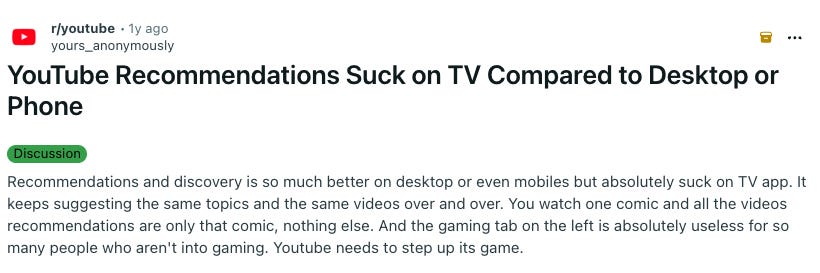
To be fair, I do like personalization. It saves me a lot of time and mental effort. It makes products feel relevant.
Of course, there is a trade-off here.
How much personalization still feels good, considering the discovery that’s lost in exchange?
Right now, it feels like everything is heavily biased toward personalization, at the expense of discovery.
And this isn’t happening by mistake. From a product perspective, optimizing for engagement is simply less risky this way.
The better products get at predicting what you’ll engage with, the more they limit what you can discover.
When a product learns what you like, it naturally starts showing you more of it.
You watched something. You stayed. It worked.
So it repeats.
Over time, this becomes a loop. You see similar content, you engage with it because it’s what’s there, the algorithm becomes more confident, and the feed gets narrower.
At some point, it stops feeling personalized and starts feeling limiting. You churn.
“You are what your recent behavior says you are.”
But that’s not how humans work.
We get bored. Our moods, and even our tastes change. Sometimes we don’t even know what we might like yet.
So what’s the sweet spot?
How do you inject uncertainty without breaking the feeling of relevance?
You don’t have to choose one side. You can design for both.
Netflix does this at the interface level. Yes, most rows are personalized. But you’ll still see “Trending”, “New Releases” or globally popular content. It reminds you that there’s a world outside your profile.
And then there’s TikTok, which takes a different approach. It doesn’t just react to what you like, it actively tests you.
Bytedance, TikTok’s parent company, has openly shared parts of the recommendation framework behind the product. One of the key ideas in its Monolith framework is real-time training. Instead of updating recommendations in slow batch cycles, it continuously learns from fresh user behavior such as watch time, likes, and skips. In their own framing, this helps capture the latest hotspots and allows users to discover new interests rapidly.
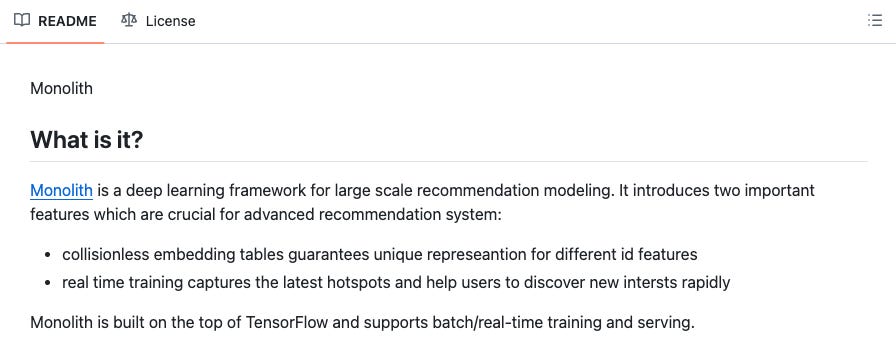
In other words, it’s not only reinforcing what already works. It is also built to react quickly to new behavior and surface new content before user taste gets stuck in a narrow loop.
Even when TikTok knows what you are likely to be hooked on, it keeps injecting content that’s slightly outside your known preferences. New creators, new topics, things that might not work.
If you engage, it learns. If you don’t, it moves on.
Think about how a baby develops taste.
If you only feed a child what they immediately like because they rejected broccoli once or twice, you end up narrowing their palate. Sure, meals become easier in the short term.
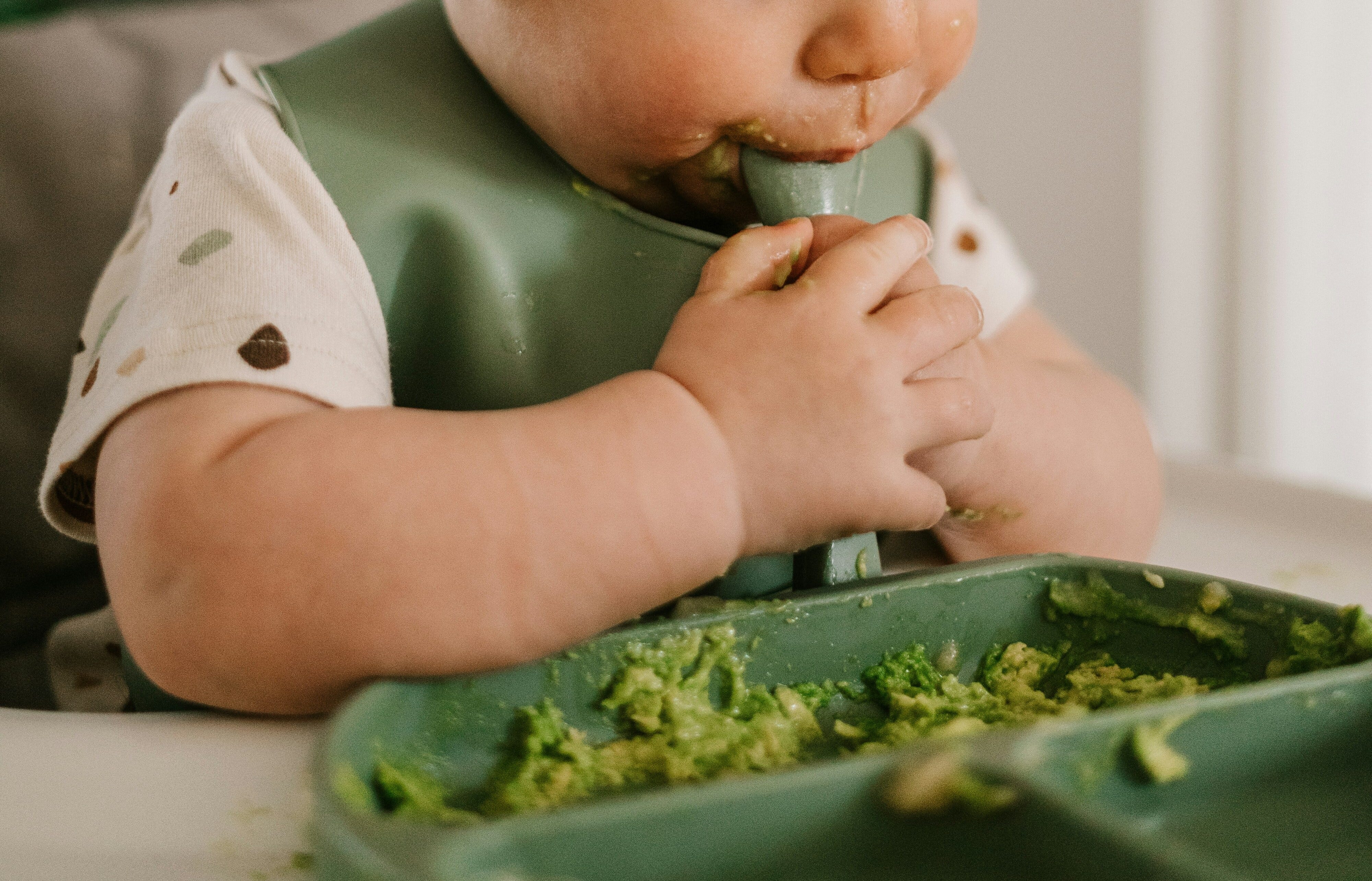
But over time, they don’t learn to enjoy new flavors. And eventually, even their “favorites” get boring.
The only way to expand their taste and make sure they continue enjoying food is to introduce new things. Not all at once, not aggressively, but consistently. A small bite here and there.
In other words, to learn about your user, you need a little room for doubt instead of staying in the same safe loop.
It will be hit or miss sometimes.
But if you get the balance right, introducing just enough novelty to avoid frustration while keeping the experience relevant, you expand what users can enjoy.
And that’s likely to be reflected in long-term engagement as well.
If a product only shows you what it’s sure you’ll engage with, it blocks itself from learning more about you over time.
And eventually, you stop discovering too.