

Today is International Women’s Day.
This won’t be a historical recap of the day. Instead, I want to share a few things that come up often in organizations or life in general.
Let’s have more awareness together.
Women’s day was never meant to be just a celebration
International Women’s Day didn’t start as a celebration.
It started with labor protests and strikes in the early 1900s, when women demanded:
better working conditions
fair wages
voting rights
We’ve come a long way since then.
Many of us work in companies where the culture is respectful and inclusive. Compared to many places and many moments in history, we are in a good place.
But like anything else, progress doesn’t mean what we have right now is perfect.
The mental shortcuts we all use
Bias is often misunderstood. Whenever we mention it, everyone gets defensive.
But it’s not always malicious.
Most of the time, it’s simply a mental shortcut.
Our brains do this constantly to process information quickly. We all have it.
But those shortcuts can create patterns we don’t notice.
For example, try this simple exercise:
Imagine you’re assembling a team for an important project.
You have two candidates: one man and one woman.
Without looking at their qualifications, who do you instinctively assume would be a better planner?
We don’t even notice the assumptions we make every day.
The power of repetition
One of the strongest forces in social life is repetition and reinforcement.
In psychology, this often shows up as a self-fulfilling prophecy.
When someone is repeatedly labeled as confident, capable, or leadership material, they tend to grow into that perception.
The opposite also happens.

If someone is subtly treated as less capable, they often receive:
fewer opportunities
fewer high risk projects
fewer chances to practice leadership
Over time, the environment reinforces the stereotype it started with.
You can see this everywhere.
As a woman, if you grow up hearing that women are worse at driving, there’s a high chance you’ll eventually become bad at driving. And it’s not really about your lack of skills as a woman. You were conditioned throughout your life.
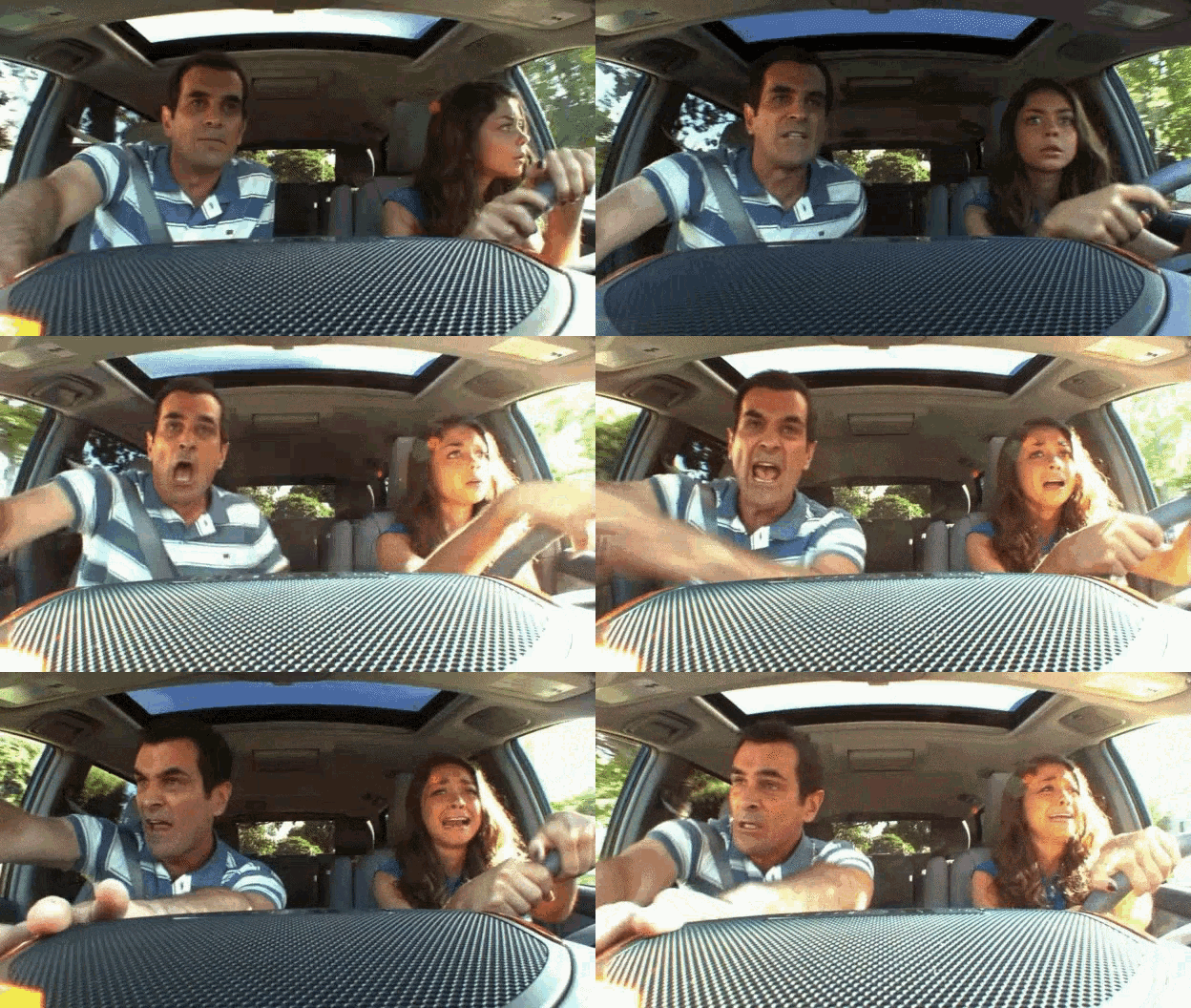
If boys are praised for math, more of them pursue related fields later in life.
If girls are rewarded for being well-behaved, fewer of them speak up publicly.
None of this requires intentional discrimination. Just the power of repetition.
The double standards we rarely notice
A lot of workplace bias appears through language and perception. For example:
When a man does it: Assertive, passionate, confident, ambitious
When a woman does it: Aggressive, emotional, arrogant, difficult
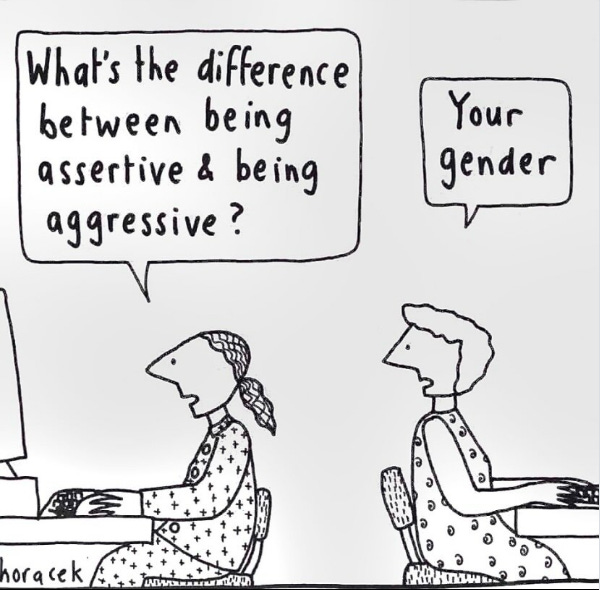
We can also see this in performance feedback.
Research and internal company reviews consistently show patterns like:
Men are given opportunities based on future potential. Women have to prove themselves over and over.
Men’s feedback:
“He has great leadership potential.”
Women’s feedback:
“She’s done a great job in her current role.”
Research has also shown that men get clear guidance on skills to improve, while women get vague, personality-focused feedback that doesn’t offer a path to career growth.
Men’s feedback:
“You should develop your strategic thinking by taking on cross-functional projects.”
Women’s feedback:
“You need to be more confident in meetings.”
Assertiveness is seen as a leadership strength in men, but a flaw in women.
Men’s feedback:
“He’s ambitious and driven.”
Women’s feedback:
“She’s too ambitious and should work on being more likable.”
These differences are subtle, but they accumulate over time.
The question that changes everything
One simple trick helps reveal unconscious bias.
Ask yourself:
“Would I react the same way if a man did this?”
Would I call it aggressive?
Would I question the confidence?
Would I doubt the expertise?
That single question can expose a surprising amount of hidden assumptions.
A few common questions
“Why isn’t there a Men’s Day?”
There is.
International Men’s Day is November 19.
But nobody really knows it, and it shows that nobody feels the constant urge to remind each other what men went through. In a way, that’s a good thing.
Women’s Day exists because historically women faced systemic barriers in:
voting
education
leadership
economic independence
Acknowledging that history doesn’t diminish anyone else’s experience.
“Isn’t this about merit? Shouldn’t the best person get the job?”
Absolutely.
The goal isn’t to create new advantages for underrepresented groups.
The goal should be making sure assumptions aren’t quietly shaping decisions.
If identical resumes receive different responses depending on whether the name sounds male or female, that’s not really meritocracy.
But we should also recalibrate our definition of merit, good, and bad.
Before I started driving in Istanbul, I was honestly shaking, partly because as a woman I had heard so many times that women are bad drivers. After a few weeks in traffic, I realized most people out there suck at driving. They just tolerate each other.
When a man makes a similar “mistake” to a woman, other men tend to think he’s just taking a shortcut because he must be in a rush, or he’s just being reckless.
But when a woman does the same thing, suddenly it becomes about her skills. She did it because she’s bad at driving.
“But aren’t there other groups facing worse discrimination?”
Yes.
And many women belong to those groups as well. Imagine them.
This argument sounds similar to fundraising for a certain disease and someone interrupting to say, “but there are other important diseases too”.
It’s irrelevant.
Bias often intersects with race, ethnicity, sexuality, disability, and socioeconomic background.
Recognizing one form of inequality doesn’t invalidate another.
What can we actually do?
The good news is the solutions don’t need to be big.
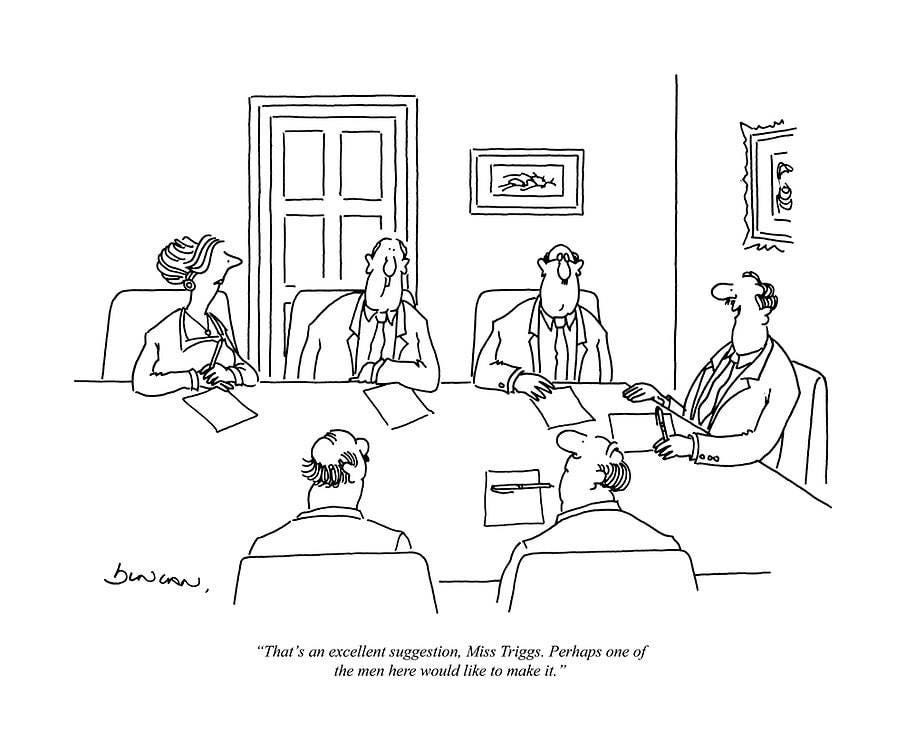
Amplify voices
If someone’s idea gets overlooked in a meeting, repeat it and give credit.
Challenge assumptions
If feedback sounds personality based instead of skill based, don’t accept it immediately. Question it.
Check reactions
Ask yourself and each other:
“Would we react the same way if someone else did this?”
Recognize privilege and pay it forward
Many of us have opportunities others didn’t. It’s not a fault, it’s because someone before us opened a door.
Let’s do it for someone else.
A final thought
Compared to many workplaces and many generations before us, we are in a good place.
And that’s something worth appreciating.
But good conditions don’t stay good automatically.
They improve because we, the people inside them, stay aware.
So maybe the spirit of Women’s Day is simple:
We’ve made progress.
Let’s keep going.
💪💪💪